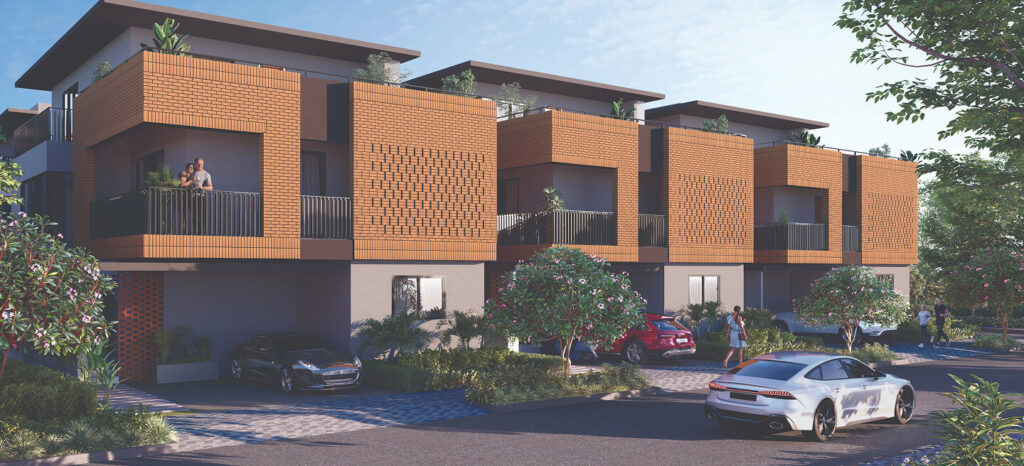
Buying a villa is one of the biggest decisions most families will make. Beautiful brochures and show homes make it easy to fall in love, but it’s worth slowing down and asking the right questions first.
Here’s a practical checklist, with examples of how Capstone Life approaches each point at The Midsummer Rain and Circular Reflections.
Start with the paperwork
Check the RERA registration
Ask for the project’s RERA number, then verify it on the Karnataka RERA website. For reference, The Midsummer Rain is registered as PRM/KA/RERA/1250/303/PR/160224/006629 and Circular Reflections as PRM/KA/RERA/1251/308/PR/160824/006970.
Review the approvals
Ask which approvals the project holds, and have a legal adviser review the documents before you commit. It’s a small step compared with the size of the purchase.
Look closely at the developer
Completed projects
Visit what the developer has already built, and speak to residents if you can. A completed project says a lot about how a company builds and how it looks after customers. Capstone Life’s completed work includes Flowing Tree, Aspira, Experia and Estrella Terraces.
Delivery and transparency
Ask how past projects were delivered against their schedules, and how clearly the process and costs are explained. Capstone Life lists transparent processes, business ethics and delivery ahead of schedule among its core commitments. Meet the team behind them.
Test the location against your real life
Don’t rely on distance claims alone. Drive the route to work and school at the times you’d really make those trips. Then treat planned infrastructure as a bonus until it’s built. Our guides to North Bangalore and Sarjapur Road can help you get started.

Go through the specifications
A villa’s quality comes through in the details, so ask for specifics in writing. It’s useful to go through the following, room by room:
- Flooring: which materials are used, and in which rooms
- Bathrooms: the brands of fixtures, and what counts as an equivalent
- Doors and security: the main door material and type of lock
- Cooling: what’s installed, and what’s only provisioned for
- Power back-up: how much of the home’s load it covers
- Convenience: smart home features and, where relevant, a built-in lift
Ask about running costs and sustainability
A home’s costs don’t end at purchase. Energy, water and maintenance continue for as long as you live there, so ask which features are built in:
- Is there on-site solar, and what’s its capacity?
- How is water heated?
- Is there provision for EV charging?
- How are water and waste managed across the community?
Our guide to net zero energy homes explains why these questions matter.
Picture the community
Finally, think about who lives there and how you’d spend your weekends. Density, amenities and shared spaces will shape your day-to-day experience at least as much as the floor plan. Ask how many homes the community will have, and which amenities are included. For ideas, see amenities for every age.
Do you have questions of your own? The Capstone Life team will be happy to talk them through.
This guide is general information, not legal or financial advice. Please verify all details independently before making a purchase decision. Images are artist’s impressions.